Go (Weiqi)
Introduction
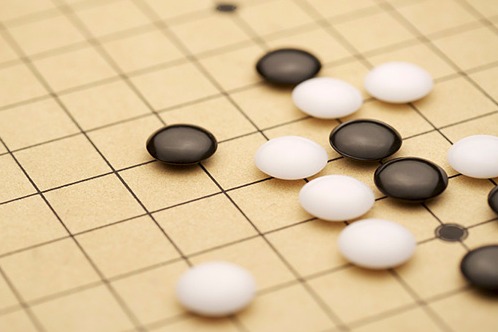
Go, also known as Weiqi in Chinese, is an ancient board game that is deeply rooted in Asian culture. With a history spanning over 4,000 years, Go is considered one of the world's oldest continuously played board games. The game involves two players who take turns placing black and white stones on a 19×19 grid, with the objective of capturing territory on the board. The game is renowned for its simple rules yet profound depth, allowing for a vast range of strategies and tactics. The game of Go boasts a deep and extensive theory, encapsulating the rich cultural essence of Chinese civilization. In 2008, it was inscribed on China's national list of intangible cultural heritage.
Origins and Cultural Significance
Originally invented in China, Go has been viewed as more than just a game. It is considered one of the four essential arts of a cultured Chinese scholar, alongside qin (the guqin), shu (calligraphy) and hua (painting). Its journey from China to Japan was through the Korean Peninsula during the Southern and Northern Dynasties (420-581). In Japan, Go gained immense popularity and became an integral part of its culture, eventually spreading to Europe and America. Go embodies several Eastern philosophical concepts, including balance, strategy, and the pursuit of harmony. The interplay of black and white stones has been likened to the duality of yin and yang, reflecting a balance of opposites and the idea that each move has both defensive and offensive potential.
The Game's Appeal
The enduring allure of Go stems from its harmonious fusion of simplicity and intricacy. While the game's rules are easily grasped, achieving mastery demands a lifetime commitment to study and practice. This juxtaposition captivates a diverse player base, from novices intrigued by its strategic complexity to seasoned experts. Go is revered not only for its strategic richness but also for the elegance of its board and stones. Players often cherish the contemplative nature of the game, finding that immersion in its play fosters heightened awareness and deep reflection.
Technological Integration and Art
The advent of artificial intelligence has brought a new dimension to Go. Programs like Google's AlphaGo have demonstrated the game's potential for technological exploration, challenging human understanding of strategy and creativity. This intersection of technology and traditional culture has sparked renewed interest in Go, particularly in the younger generation. Moreover, Go has inspired various forms of art, from paintings and literature to digital media, each exploring the game's philosophical and aesthetic aspects. The blend of technology and art in Go reflects its timeless appeal and adaptability, ensuring its relevance in modern society.
Community and Cultural Exchange
Go serves as a powerful medium for cultural exchange and community building. Events and tournaments often transcend language barriers, fostering friendships and understanding among diverse groups of people. The game is a common language that unites players from different backgrounds, allowing them to share strategies, philosophies, and experiences. This spirit of camaraderie is evident in initiatives like the Go exchanges between Chinese and Japanese players, which highlight the role of Go in promoting international dialogue and cooperation. The establishment of Go associations and the release of resources like the Chinese-English Dictionary of Weiqi Terms further enhance the global community's ability to connect and grow together through the shared love of Go.








